
Reviewed · FOOD & DRINK
Cultural Walking Tour in Yerevan with Armenian food Tastings
Yerevan rewards curious walkers. This four-hour tour links grand squares, Soviet-era landmarks, Armenian art, markets, and Cascade, while adding local food and drink along the way. I like the clear city introduction and the way the guide connects monuments to Armenia’s complicated past. I also like that you can taste something local instead of simply looking at buildings.
The main drawback is the pace and length. The route covers about 4 kilometers and can last close to four hours, with some stops devoted to long explanations in alleys or quieter corners. If you want a quick overview, this may feel slow. If you want stories, context, and a proper first look at Yerevan, $55 is a fair price, especially with food included.
In This Review
- Key points to know before you book
- Starting at Republic Square with Armenia in the background
- Mirzoyan Library and the city’s creative side
- Vernissage, khachkars, and difficult national stories
- Charles Aznavour Square and a taste of sea buckthorn
- Missak Manouchian Park and Armenian cross-stone art
- Opera Square and the Soviet city
- Cascade and the final view of Yerevan
- What the guides do well, and where to pay attention
- Is $55 good value for four hours?
- Who should book this Yerevan walk?
- Should you book it?
- FAQ
- How long does the cultural walking tour last?
- How far do you walk?
- Where does the tour begin?
- Where does the tour end?
- Is food included?
- What language is the tour offered in?
- What happens if the weather is poor?
Key points to know before you book
- Four kilometers on foot: The route is active but manageable for most people who can walk for several hours.
- A useful first-day orientation: You visit Republic Square, Vernissage, the Opera, and Cascade without worrying about directions.
- Food is part of the lesson: Tastings include local snacks and sea buckthorn juice, which adds flavor to the cultural discussion.
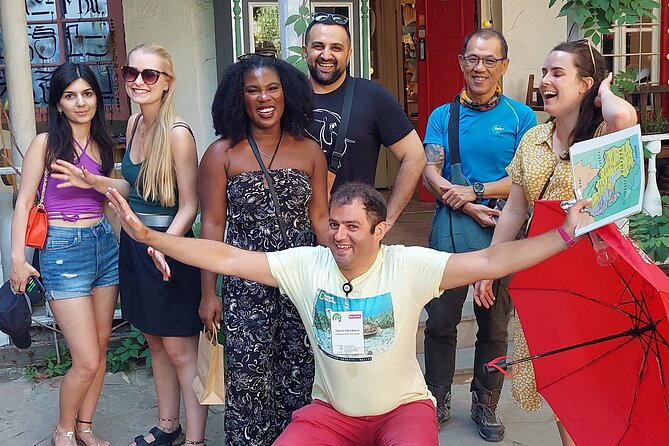
- Guides shape the experience: Tigran and Ioanna receive especially warm praise for energy, humor, flexibility, and clear explanations.
- A broad historical sweep: The tour moves from Armenian medieval art to Soviet urban planning, modern culture, and present-day geopolitics.
- A group of up to 35: The maximum size is fairly large, so your experience may depend on how well you can hear the guide.
Starting at Republic Square with Armenia in the background
The tour begins by the Singing Fountains at Republic Square, one of the easiest places in Yerevan to find. This is a practical starting point because the square gives you an immediate sense of the city’s scale and design.
Republic Square is built around an oval traffic circle. Look down at the stone pattern in the center, designed to resemble a traditional Armenian rug. It is a small detail, but it shows how Armenian identity is worked into public architecture rather than placed only inside museums.
You get about 30 minutes here. That gives the guide time to explain the square and place Yerevan within Armenia’s past. I appreciate this kind of opening because it helps you understand later stops instead of treating the city as a string of unrelated photo opportunities.
The next stop is the statue of Stepan Shahumyan, a 15-minute visit. It has a useful place in Yerevan’s public story because it was the first monument officially installed in the city. Sculptor Sergey Merkurov and architect Ivan Zholtovsky created it, and both were important figures in the Soviet artistic world.
This is a short stop, but it helps explain how public monuments changed under Soviet rule. You will not spend a long time here, which is sensible. The value comes from the surrounding explanation, not from the statue alone.
More Food Tours:
- Khor Virap, Noravank & Birds’ Cave Day Trip with Wine Tasting
★ 5.0 · 320 reviews - Tatev & Shaki Waterfall Guided Group Tour with Wine Tasting
★ 5.0 · 266 reviews - Yerevan Private Walking Food Tour
★ 5.0 · 31 reviews
Mirzoyan Library and the city’s creative side
Mirzoyan Library offers a welcome change from monuments and political history. The space contains books and journals connected to design and photography, along with a bar and gallery. It is described as peaceful, and the 30-minute visit gives you time to notice the atmosphere rather than rush through it.
I like this stop because it shows a more current and personal side of Yerevan. The city is not only grand squares, memorials, and Soviet buildings. It also has places where photography, design, reading, and conversation meet.
Do not expect a major museum visit here. The appeal is the setting and the subjects represented. For anyone interested in visual culture, it gives the walking tour a more modern note. For someone focused only on famous monuments, this may feel less essential.
The route then reaches Tufenkian Heritage Hotels, associated with designer carpets and hand-crafted rugs in different styles. Armenian carpets carry more than decorative value. They reflect regional craft traditions, patterns, materials, and the importance of handmade work in Armenian culture.
The itinerary allows about 30 minutes at this stop. Use that time to look closely at the designs and ask questions. You may find this more rewarding if you care about textiles or want to bring home something with a clear connection to Armenia. If shopping is not your interest, the guide’s explanation is likely to be the main reason to stay engaged.
Vernissage, khachkars, and difficult national stories
Vernissage Market brings together several subjects that could easily fill an afternoon on their own. The route includes the statue of Garegin Nzhdeh, a major Armenian national figure, followed by discussion of Armenia’s geopolitical situation and important events beginning in the 19th century.
This is one of the tour’s more serious sections. Armenia’s past includes shifting borders, foreign powers, national movements, and painful questions of cultural loss. The tour also visits Cultural Genocide Park, where you can see khachkars, the carved Armenian cross-stones associated with early medieval Armenian art.
Khachkars are not simple crosses cut into stone. They often include rosettes, interlaced patterns, and plant forms. Their purpose can be religious, commemorative, or connected to a specific person or event. Seeing them in person makes Armenian art feel more physical and local than it would in a short textbook description.
The stop also includes Republic Square Metro station and an introduction to Yerevan’s metro system. That may sound like a small detail, but public transport tells you a great deal about a city’s Soviet planning and daily life. You get a glimpse of Yerevan below the grand facades and tourist routes.
The listed time is 30 minutes, so expect a concentrated explanation rather than a complete treatment of Armenia’s modern politics. I would listen carefully, ask questions, and avoid expecting every complicated issue to be settled in one stop.
Charles Aznavour Square and a taste of sea buckthorn
Charles Aznavour Square brings the tour back to architecture and food. Here you see Grand Hotel Yerevan, the city’s oldest hotel, opened in 1926. Its facade is decorated with black Armenian tuff stone, a material closely tied to Yerevan’s appearance.
The square is a good place to notice how the city uses local stone. The black tuff gives the hotel a formal, solid look, and it fits the broader story of buildings shaped by the city’s volcanic materials and Soviet-era development.
This is also where you taste sea buckthorn juice. The bright orange fruit has been used for food, traditional medicine, and skin treatment in China, Russia, and northern Europe. It is an unusual tasting for many visitors, and that is exactly why it works. You are not simply being handed a familiar soft drink with a local label.
The stop lasts about 15 minutes. The juice is a taste, not a full meal, but it gives the tour a useful sensory pause. The broader food element includes snacks at local eateries, and one review described the portions as enough for a light lunch. I would still plan on eating a proper meal later if you have a large appetite.
A few more Yerevan trips worth weighing up
- Masterclass of Armenian food with a local family in Yerevan
★ 5.0 · 7 reviews
Missak Manouchian Park and Armenian cross-stone art
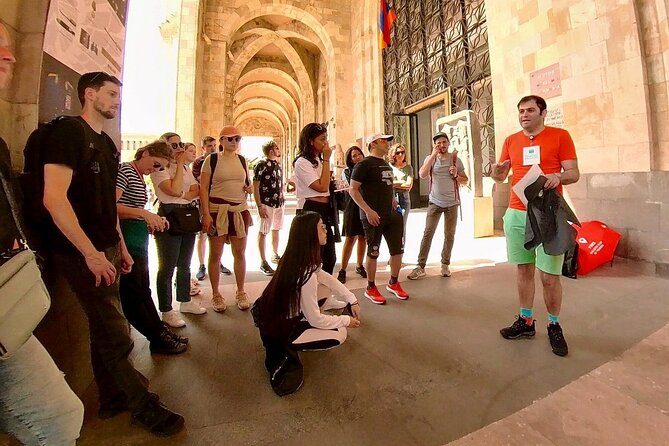
The 15-minute stop at Missak Manouchian Park continues the khachkar theme. Here the focus is Armenian cross-stone art and its place in early medieval culture.
This kind of stop rewards close looking. You can examine the carved cross, surrounding geometric forms, rosettes, and botanical details while the guide explains what makes the form distinct. The visit is brief, so it is worth paying attention rather than treating it as another quick photograph.
The park also gives the route a quieter moment. Four hours of walking and talking can become tiring, especially in a group. Short pauses in places like this help break up the route, even when the explanation remains detailed.
Opera Square and the Soviet city
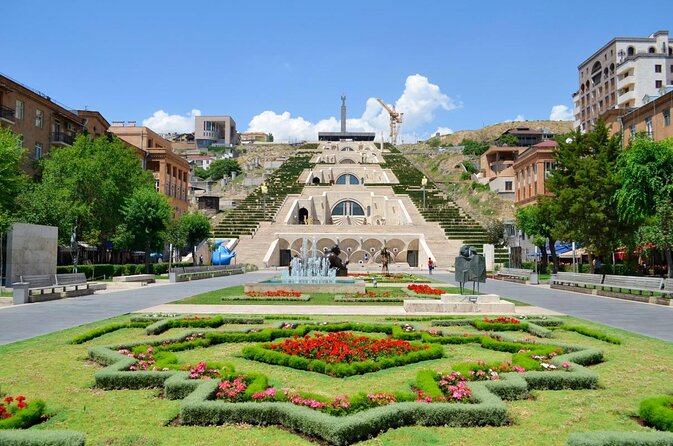
The Armenian National Academic Theater of Opera and Ballet is one of the route’s major architectural stops. The building’s construction began on November 28, 1930, during celebrations marking the tenth anniversary of Soviet Armenia. It officially opened on January 20, 1933.
The Opera is useful for understanding Yerevan as a planned capital. Its history connects artistic ambition, Soviet political power, and Armenian cultural life. The guide can help you read the building as more than a handsome theater.
You have about 30 minutes here. That is enough time to take in the exterior and hear the background, though not enough for a performance. The experience does not include admission to an opera or ballet, so you should think of this as an architectural and cultural visit.
This is also the point where the walking route may feel long to some people. The tour has already covered squares, monuments, a library, a market, and parks. If you prefer a short city walk, a four-hour schedule with many explanations may test your patience. If you enjoy connecting buildings to politics and culture, the length is part of the value.
Cascade and the final view of Yerevan
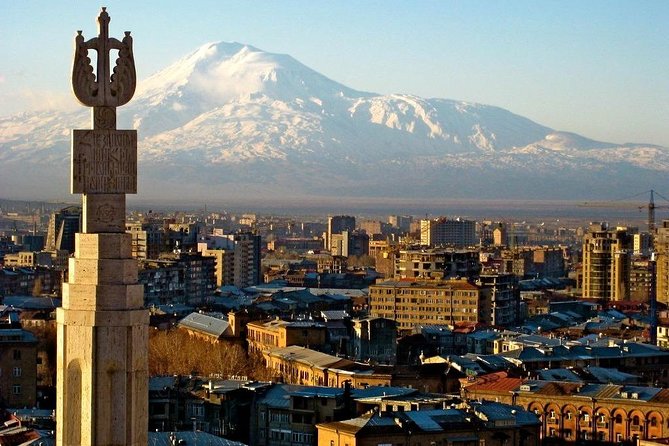
The tour ends at the Cafesjian Center for the Arts and the Yerevan Cascade, next to the Alexander Tamanyan statue on Moskovyan Street. The Cascade is a huge staircase complex with fountains, and the Cafesjian Center presents contemporary art in Armenia while also introducing Armenian culture to an international audience.
This is a strong finish because the setting feels open and visually different from Republic Square. You move from formal government buildings and historic monuments to a monumental staircase and modern art. The 15-minute stop is enough for an introduction, but not for a full art visit.
The end point is clear: Kaskad, next to the Alexander Tamanyan statue. That matters because you can continue exploring the area after the tour or use it as a simple reference point for the rest of your day.
Keep in mind that the tour ends at Cascade rather than returning you to Republic Square. The route is designed as a one-way introduction, which saves time but means you should plan your next stop from the Cascade area.
What the guides do well, and where to pay attention
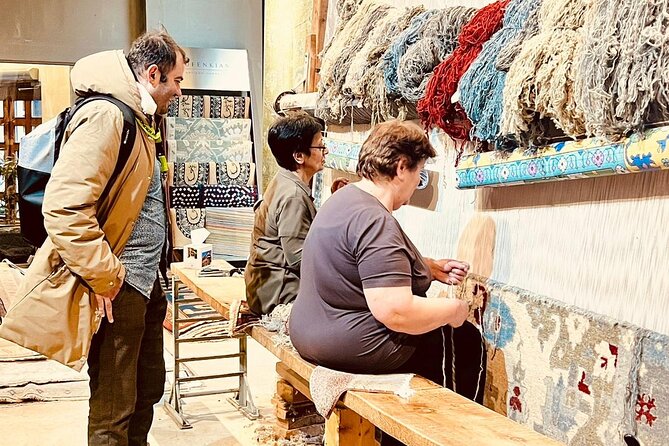
The strongest praise goes to the guides. Tigran is repeatedly described as passionate, energetic, punctual, and easy to understand. He uses pictures and maps, adds humor, and gives substantial background on Yerevan and Armenia. Ioanna receives similar praise for warmth, flexibility, humor, and clear explanations.
One useful detail is that a guide allowed a participant to join two days later after missing the original Sunday booking. That suggests a degree of flexibility, though you should not assume a schedule change is always possible.
Most of the comments describe an enjoyable and well-paced walk. The food is also praised, with the tastings described as delicious and sufficient for a light lunch. The tour seems especially good when the guide can keep the group together, speak clearly, and adjust the explanation to the setting.
There is one important caution. A negative experience described low speaking volume near traffic and construction, overly long talks in alleyways, and jokes that did not translate well into English. The same person wanted more architecture and a simpler overview of Yerevan.
That criticism is worth taking seriously, especially because the group can reach 35 people. If you are near the back, ask the guide to speak up early. If a point is unclear, ask for a shorter explanation or a repeat. The overall rating is very high at 4.9 from 334 ratings, with 98 percent recommending the tour, but a large group can make hearing and pacing less consistent.
Is $55 good value for four hours?
At $55 per person, this is not the cheapest way to walk around Yerevan. You can visit Republic Square, Vernissage, Opera Square, and Cascade independently at no admission cost. The question is what you are paying for.
You are paying for a route that connects those places, historical interpretation, guidance through less obvious streets, and food and drink tastings. You also avoid spending part of your first day figuring out the city map. For a first visit, that organization has real value.
The food helps justify the price, but do not confuse tastings with a restaurant meal. The available details point to local snacks and sea buckthorn juice, with enough food for a light lunch in some cases. Your appetite and the exact food served may affect how generous the experience feels.
The price is best for you if you enjoy walking, asking questions, and learning the story behind ordinary streets. It is less attractive if you mainly want quick photographs of the headline sights or prefer to set your own pace.
Who should book this Yerevan walk?
I would choose this tour for a first day in Yerevan, particularly if you have only a short stay. It gives you a broad orientation and finishes at Cascade, one of the city’s key areas.
It also suits you if you like history presented through streets, statues, stonework, markets, and food rather than through a museum lecture. The mix of medieval khachkars, Soviet monuments, contemporary art, carpet design, and local juice gives the day variety.
You should think twice if you dislike long explanations or have trouble walking for about four hours. The tour is active, and the group size can be substantial. Anyone who needs a very quiet guide or a tightly timed two-hour overview may prefer to explore independently.
The tour is offered in English, uses a mobile ticket, and is near public transportation. Service animals are allowed, and most people can participate. It requires good weather and a minimum number of participants. Free cancellation is available up to 24 hours before the start time, but late cancellations and late changes are not accepted.
Should you book it?
Book this tour if you want a guided introduction with real context, not just a checklist of monuments. Tigran and Ioanna appear to bring the warmth and energy that make a long walk enjoyable, and the food tastings add something you cannot get from a standard architecture route.
I would book it early, since the experience is commonly reserved about 24 days ahead. Choose it for your first day, wear comfortable shoes, stay close enough to hear the guide, and arrive ready for a substantial amount of talking as well as walking.
Skip it if you want a short, independent stroll or a full meal. For most first-time visitors who want Yerevan explained in one organized afternoon, the combination of major sights, local tastes, Armenian art, and history makes the $55 cost reasonable.
FAQ
How long does the cultural walking tour last?
The tour lasts approximately four hours.
How far do you walk?
The route is about 4 kilometers, according to one detailed description of the experience.
Where does the tour begin?
It begins at the Singing Fountains in Republic Square, Yerevan.
Where does the tour end?
It ends at Cascade on Moskovyan Street, next to the Alexander Tamanyan statue.
Is food included?
Yes. The experience includes food and drink tastings from local eateries, including sea buckthorn juice. The tastings may be enough for a light lunch, but they are not presented as a full restaurant meal.
What language is the tour offered in?
The tour is offered in English.
What happens if the weather is poor?
The experience requires good weather. If it is canceled because of poor weather, you can receive a different date or a full refund.
More Walking Tours
- Private sightseeing and walking tour in Yerevan
★ 5.0 · 78 reviews - Evening walking tour in Yerevan
★ 5.0 · 19 reviews - Walking Yerevan City Tour with 5 Wine & 10 years-old brandy
★ 5.0 · 17 reviews - Budget walking tour in Yerevan (Yerevan city tour)
★ 5.0 · 4 reviews
Just added around Yerevan
- Photography tour in Yerevan (Yerevan city tour)★ 4.5 · 3 reviews
- Private Tour: Lake Sevan, Sevanavank★ 4.5 · 3 reviews
- Mount Aragats, Amberd Fortress, Saghmosavank Monastery, Alphabet – private tour★ 4.0 · 3 reviews
- Tsitsernakaber-Hripsime-Echmiatsin-Noy brandy factory★ 4.5 · 3 reviews
- Secret Spots Of Armenia Day Private Tour★ 5.0 · 3 reviews
- Day Trip to Tatev Monastery★ 4.5 · 3 reviews
- Wine Trip in Yerevan★ 5.0 · 3 reviews
- Private Tour: Garni-Geghard-Tsaghkadzor-Sevan★ 5.0 · 3 reviews
Food & Drink, compared.
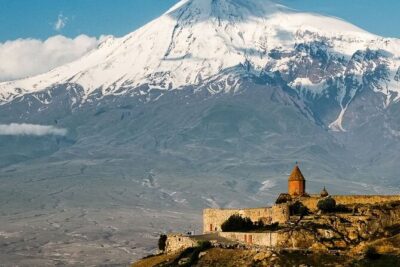
Khor Virap, Noravank & Birds’ Cave Day Trip with Wine Tasting
Read our review →
Tatev & Shaki Waterfall Guided Group Tour with Wine Tasting
Read our review →
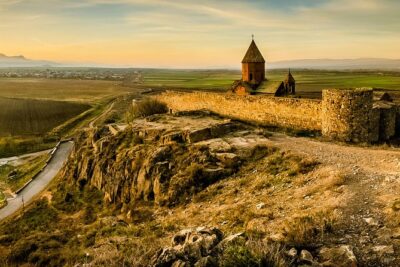
Khor Virap, Noravank Private Tour with Optional Wine Tasting
Read our review →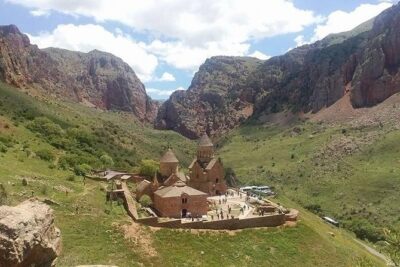
Tatev,Shaki(waterfall),Noravank,Wine tasting,Khor Virap
Read our review →
Khor Virap Day Trip with Mount Ararat Wine Tasting
Read our review →Masterclass of Armenian food with a local family in Yerevan
Read our review →Browse the lists this tour appears in