
Reviewed · ECHMIADZIN AND ZVARTNOTS TOURS
Tsitsernakaber-Hripsime-Echmiatsin-Noy brandy factory
Armenia’s sacred heart is close to Yerevan. This half-day tour combines the solemn Tsitsernakaberd Genocide Memorial, three important Christian sites around Etchmiadzin, and a tasting at the historic Noy Brandy Factory. I like the clear mix of memory, religion, art, and local drink, and I especially like that museum admission, transportation, guiding, and tastings are included.
The main point to consider is the timing. The tour is advertised as roughly four to five hours, but the listed stops alone add up to more than three hours before driving time. The cathedral is also under restoration, so you should expect to see it from outside and visit its museum rather than enter the full cathedral interior.
In This Review
- Key points at a glance
- Why this makes a good first day from Yerevan
- Tsitsernakaberd: begin with Armenia’s difficult memory
- Saint Hripsime Church and the story behind its name
- Etchmiadzin Cathedral and the museum of Armenian faith
- Saint Gayane Church and Armenia’s Christian turning point
- Noy Brandy Factory: end with Armenia in a glass
- The guide can shape the whole experience
- Timing, transport, and practical value
- Who should choose this tour?
- Should you book it?
- FAQ
- Where does the tour start?
- How long does the tour last?
- Is Etchmiadzin Cathedral open for an interior visit?
- What is included at the Noy factory?
- Is lunch included?
- How large is the group?
Key points at a glance
- Tsitsernakaberd begins the day with context: The memorial and museum explain the Armenian Genocide and give emotional weight to the rest of the visit.
- Three important Etchmiadzin sites fit into one outing: Saint Hripsime Church, Etchmiadzin Cathedral, and Saint Gayane Church connect Armenia’s religious story with its architecture.
- The cathedral visit includes important relics: The museum displays objects associated with Noah’s Ark and the Holy Lance.
- Noy adds a distinctly Armenian finish: You taste port wine from 1941 and two types of brandy at a factory founded in 1877.
- A small group keeps the day manageable: The maximum group size is 15, with an air-conditioned vehicle and local guide.
- The price covers most major costs: At $100 per person, the package includes museum tickets, all activities, transport, guiding, and alcoholic drinks. Lunch costs an additional $15 if you want it.
Why this makes a good first day from Yerevan
Yerevan is a convenient base for seeing Armenia’s religious center without arranging several separate trips. The route links the capital with Tsitsernakaberd and Vagharshapat, the city commonly known as Etchmiadzin, in one organized outing.
I like the balance here. You are not spending the whole day looking at churches, and you are not spending it on a tasting with little cultural context. The memorial gives you a serious beginning, the churches explain Armenia’s Christian identity, and Noy brings in a famous part of the country’s modern craft tradition.
The tour starts at 9:30 am, which is useful if you want the afternoon free. You will be in a vehicle between stops, and the air conditioning matters during Armenia’s warmer months. The group limit of 15 is not private-tour small, but it is more personal than a large coach outing.
The price is easiest to judge by what it bundles. At $100, you are paying for a guide, transport, museum entry, organized access to four major stops, and a tasting of three alcoholic drinks. If you were mainly seeking a cheap church visit, this would feel costly. If you want one guided cultural route with the driving handled for you, the package has a fairer value.
More Echmiadzin and Zvartnots Tours:
- Group Tour: Echmiadzin Cathedral & churches, Zvartnots Temple
★ 5.0 · 352 reviews - Private Half-day Echmiadzin Cathedral, Hripsime & Zvartnots Temple from Yerevan
★ 5.0 · 95 reviews - Private tour to Echmiadzin (st Cathedral), Zvartnots, Khor Virap, Garni, Geghard
★ 5.0 · 67 reviews
Tsitsernakaberd: begin with Armenia’s difficult memory
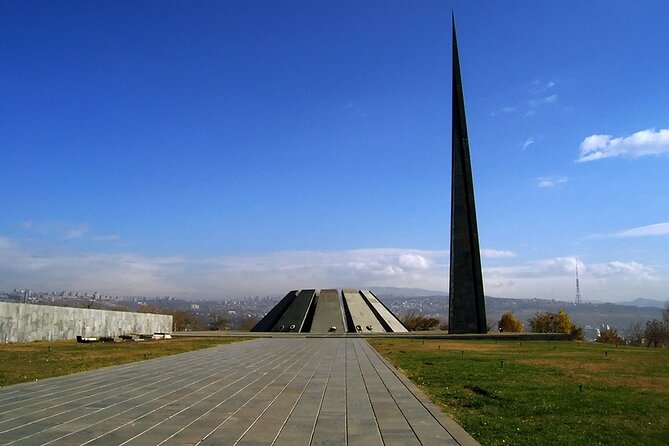
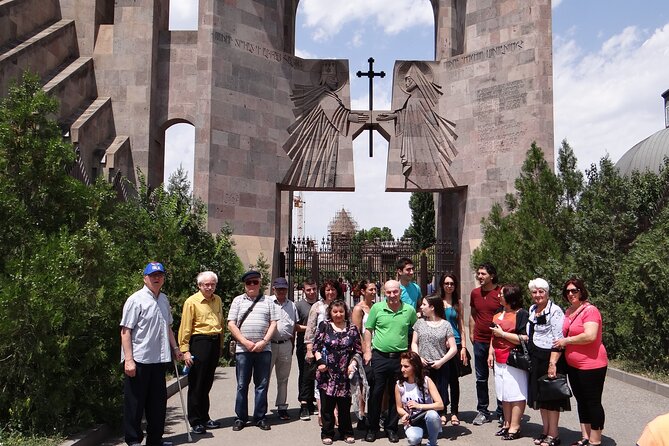
The first stop is Tsitsernakaberd, Yerevan’s memorial complex for the victims of the Armenian Genocide. Its central design includes a tall granite stele and twelve surrounding slabs, representing the twelve provinces of historic Western Armenia where the genocide took place.
At the base, an eternal flame provides a quiet focal point. The site is meant for remembrance rather than sightseeing in the usual sense, and you should give it the attention it deserves. The memorial’s shape, stone, and open setting make the stop visually powerful, but its main value is historical and human.
The museum adds detail to what the monument expresses. It presents the history and atrocities of the genocide, helping you understand why remembrance is such a central part of Armenian public life.
The scheduled visit lasts about 45 minutes, and admission to the memorial is free. That is enough time to see the monument and visit the museum, though the guide’s pace and the group’s interest will shape how much time you spend indoors.
I consider this an important opening stop because it prevents the religious sites from feeling disconnected from the country’s modern story. The day begins with Armenia as a nation shaped by loss and memory, not just as a place of old stone churches and brandy cellars.
Saint Hripsime Church and the story behind its name
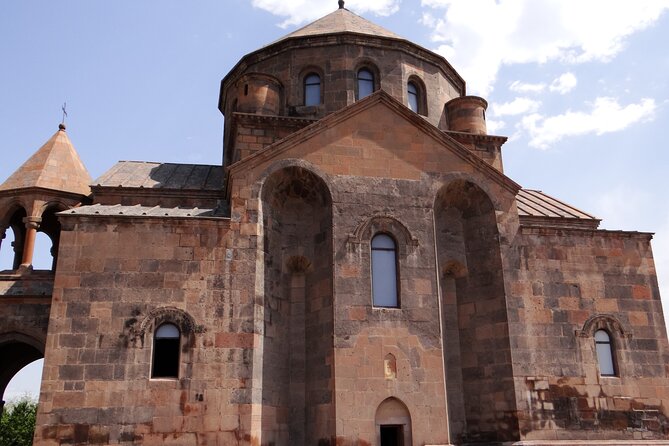
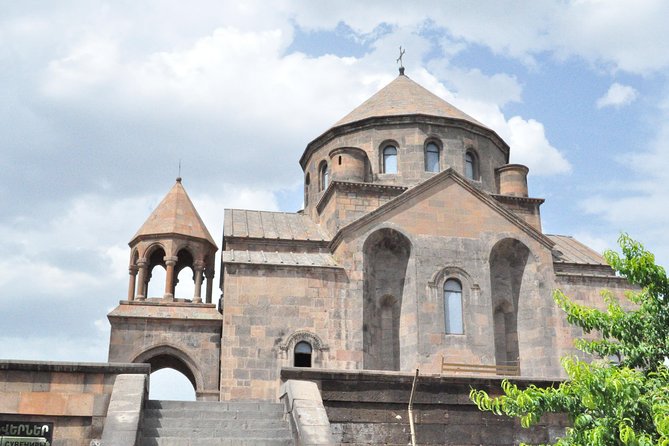
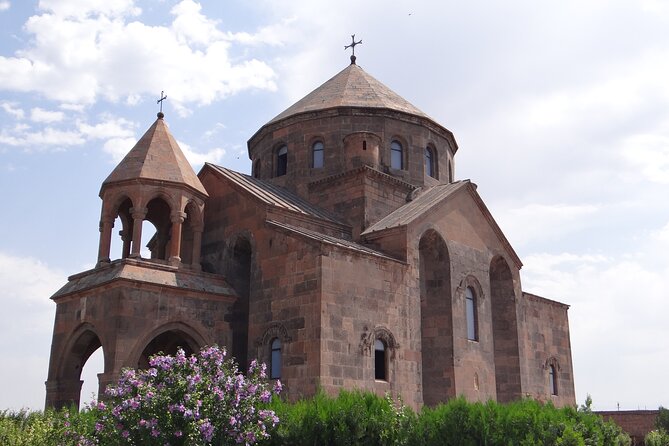
The next stop is Saint Hripsime Church, a seventh-century building and a UNESCO World Heritage site. The visit is scheduled for about 30 minutes, and admission is included at no extra charge.
Saint Hripsime is one of Armenia’s oldest surviving churches. Its age is important, but the story connected to its name gives the building a more personal focus. The guide explains the life of Catholicos Komitas, who was involved in the church’s construction.
This is a short stop, so you should expect a focused visit rather than a long architectural study. You will have time to see the church and hear the main explanation, but not necessarily to linger over every stone or detail.
The church also helps you see how early Armenian Christian architecture developed. The country adopted Christianity in the fourth century, and these churches show how faith became fixed in local stone, proportion, and place.
I like the way Saint Hripsime works in the sequence. After the memorial, it turns the discussion toward Armenia’s spiritual identity. Then, when you reach Etchmiadzin Cathedral, you have enough background to understand why the site matters.
Etchmiadzin Cathedral and the museum of Armenian faith
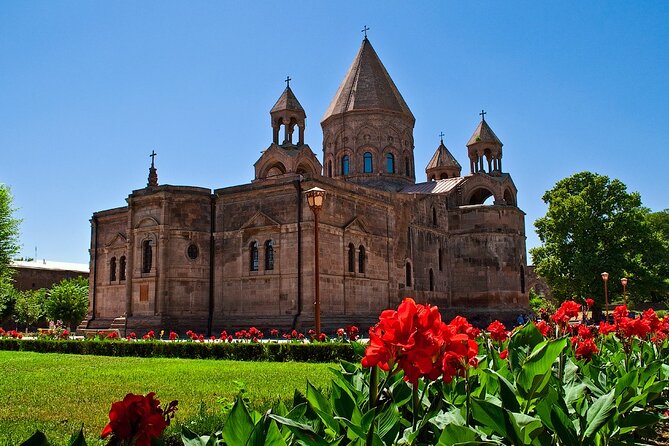
Etchmiadzin Cathedral is the central destination of the day. It is the home of the Armenian Apostolic Church and is described as the oldest Christian cathedral in the world. The wider Etchmiadzin complex is also one of the country’s most important UNESCO World Heritage areas.
There is one key limitation: the cathedral is under restoration. You should expect to view it from outside rather than enter the complete cathedral interior. That may disappoint anyone who booked the tour mainly for the building itself, but the museum visit helps make up for the restricted access.
The museum stop lasts about one hour, and admission is included. Among the objects displayed are a piece associated with Noah’s Ark and the Holy Lance, a relic connected with the Crucifixion. These are not casual curiosities. They show how Armenian religious tradition links biblical stories, early Christianity, and the national church.
Your guide is especially useful here. The details can be difficult to follow if you simply walk through the complex alone, particularly when several centuries of church history and religious tradition are being discussed at once.
The name Etchmiadzin is often explained as Holy Descent, referring to the tradition that Christ appeared in a vision and indicated the place for the cathedral. You do not need to accept every religious tradition literally to appreciate its importance. This is the spiritual center of the Armenian Apostolic Church, and the visit gives you a direct look at how faith and national identity overlap in Armenia.
A few more Yerevan trips worth weighing up
- Group Tour: Garni, Symphony of Stones, Geghard, Lavash Baking
★ 5.0 · 1,042 reviews - Group Tour: Lake Sevan (Sevanavank), Dilijan (Goshavank, Haghartsin)
★ 5.0 · 1,036 reviews - Group tour: Khor Virap, Noravank, Areni Winery and Cave
★ 5.0 · 651 reviews - Yerevan: Garni, Geghard, Symphony of Stones & Lavash Baking
★ 5.0 · 589 reviews
Saint Gayane Church and Armenia’s Christian turning point
Saint Gayane Church is identified as the third UNESCO-listed church in Vagharshapat. It is not included among the four detailed stop descriptions in the schedule, so you should confirm the exact timing with the operator before departure. The tour’s stated focus includes the church, and the guide is expected to discuss Armenia’s conversion to Christianity there.
That context is the main reason to pay attention at Saint Gayane. Armenia’s conversion was not a small change in private belief. It altered the country’s public life, architecture, art, and connection with the Armenian Apostolic Church.
The church belongs to the same group of historic religious sites that makes Etchmiadzin so important. Seeing Saint Hripsime, Etchmiadzin Cathedral, and Saint Gayane together lets you compare their forms and understand that the UNESCO designation covers a religious center, not just one isolated building.
The visit should be comfortable for most people, since the tour notes that most participants can take part. Still, churches are active religious places, not only monuments. Modest clothing and a quiet manner are sensible choices, even though specific dress rules are not provided.
Noy Brandy Factory: end with Armenia in a glass
The final major stop is the Noy Yerevan Ararat Brandy-Wine-Vodka Factory. Founded in 1877, the factory is known for Armenian brandy made from local grapes and aged in oak barrels.
The tasting includes port wine from 1941 and two types of brandy. The age of the port wine gives this stop an unusual historical touch, while the two brandies let you compare styles rather than sample only one drink.
A guided factory visit is included, so you are not simply handed a glass and sent on your way. You can learn about traditional distillation methods, the use of local grapes, and the long aging process that gives Armenian brandy its smooth, complex character.
The tasting lasts about one hour. That is a generous amount of time for a final stop, but you should pace yourself, especially if you have not eaten. Alcoholic beverages are included, while lunch is not. If you want lunch, the stated extra cost is $15 per person.
Noy’s international reputation also gives the tasting some useful context. The factory exports to more than 30 countries and has received awards, including recognition from the International Wine and Spirit Competition. Those facts do not guarantee that you will like every pour, but they explain why Armenian brandy is an important national product rather than a minor souvenir.
This is also the most social and relaxed part of the route. After a memorial and several churches, a tasting gives the day a change of pace. I like that the drink is connected to Armenian agriculture, production, and family traditions rather than added as a random entertainment stop.
The guide can shape the whole experience
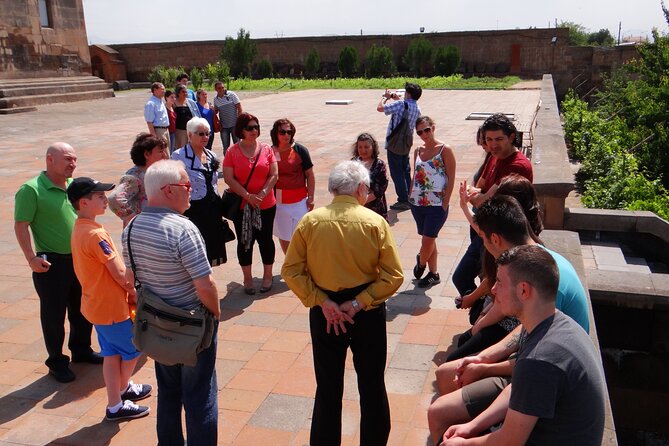
The guide matters greatly on this tour because the sites are more meaningful with explanation. Names, dates, religious terms, and national history can otherwise blur together, especially during a quick half-day route.
Nvard is specifically praised for speaking English well, explaining the history clearly, and helping a solo guest take photographs. That last detail is worth noting if you are traveling alone. A guide willing to take your picture can make a real difference at large memorials and church courtyards.
The service is listed as local guiding, and the maximum group size is 15. You should not expect the intimacy of a private historian, but the group cap should make it easier to hear explanations and ask questions.
The tour provider is Central Tour. Confirmation is sent within 48 hours of booking, subject to availability, so it is sensible not to assume the reservation is final until that message arrives.
Timing, transport, and practical value
The start time is 9:30 am, with pickup offered. The advertised duration is described in different places as about four hours and about five hours, while the scheduled stop times total roughly three hours and 15 minutes before driving is added.
I would plan on giving the outing most of a morning and part of the afternoon. Do not book a tightly timed lunch, museum reservation, or evening departure immediately afterward. Organized tours often move at the group’s pace, and the cathedral restoration or a longer museum explanation could affect the schedule.
The air-conditioned vehicle is included, which makes the route easier than arranging separate taxis to several sites. Public transportation is nearby, but the tour’s value comes from having one vehicle and one guide connect the stops.
The group discount is available, though no specific discount amount is provided. Mobile tickets are supported, and service animals are allowed. Most people can participate, but the tour information does not give detailed descriptions of steps, surfaces, or restroom access.
The tour is non-refundable and cannot be changed for any reason. That is a strict condition, so I would book only after your Yerevan schedule is firm.
Who should choose this tour?
I would recommend it to you if you want a guided introduction to Armenia’s religious center but have limited time in Yerevan. It suits first-time visitors who want the main Etchmiadzin churches, a serious national memorial, and a brandy tasting in one day.
It is also a good fit for solo visitors. The small maximum group and the example of Nvard helping with photographs suggest a friendly format for someone traveling alone.
History-minded visitors will get the most from Tsitsernakaberd and the museum. People interested in architecture will appreciate the age and UNESCO status of the churches, though the cathedral restoration limits the interior experience.
You may want a different plan if you prefer long, quiet visits at each church or dislike organized group timing. The route covers several subjects quickly, and the brandy tasting may not appeal to anyone who does not drink alcohol. Since the cathedral is viewed from outside, you should also avoid booking if full interior access is your main goal.
Should you book it?
I would book this tour if you want one well-rounded half-day from Yerevan with the driving, guide, admissions, and tasting arranged in advance. The strongest parts are the range of experiences, the included Noy tasting, and the chance to see three UNESCO-linked religious sites with historical explanation.
At $100 per person, it is not the cheapest way to see Etchmiadzin. Yet the price becomes more reasonable when you count the air-conditioned vehicle, local guide, museum entry, and port wine and brandy tasting. Just allow extra time, remember that the cathedral is under restoration, and confirm Saint Gayane’s exact stop timing before you set your schedule.
FAQ
Where does the tour start?
The tour starts at 9:30 am in Yerevan, and pickup is offered.
How long does the tour last?
The duration is listed as approximately four to five hours. The scheduled stop times total about three hours and 15 minutes before travel time between locations.
Is Etchmiadzin Cathedral open for an interior visit?
The cathedral is under restoration, so the tour views it from outside and visits the Etchmiadzin museum instead.
What is included at the Noy factory?
The tasting includes port wine from 1941 and two types of brandy. Alcoholic beverages, factory activities, and museum tickets are included.
Is lunch included?
No. Lunch is not included, but it can be requested for $15 per person.
How large is the group?
The tour can have a maximum of 15 participants.
Just added around Yerevan
- Photography tour in Yerevan (Yerevan city tour)★ 4.5 · 3 reviews
- Private Tour: Lake Sevan, Sevanavank★ 4.5 · 3 reviews
- Mount Aragats, Amberd Fortress, Saghmosavank Monastery, Alphabet – private tour★ 4.0 · 3 reviews
- Secret Spots Of Armenia Day Private Tour★ 5.0 · 3 reviews
- Day Trip to Tatev Monastery★ 4.5 · 3 reviews
- Wine Trip in Yerevan★ 5.0 · 3 reviews
- Private Tour: Garni-Geghard-Tsaghkadzor-Sevan★ 5.0 · 3 reviews
- Vayots Dzor Areni Wine Route★ 3.5 · 3 reviews
Echmiadzin and Zvartnots Tours, compared.
Echmiadzin Cathedral & churches, Zvartnots Temple
Read our review →
Private Half-day Echmiadzin Cathedral, Hripsime & Zvartnots Temple from Yerevan
Read our review →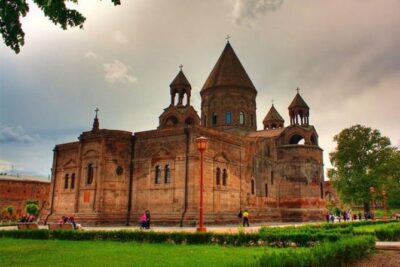
Private tour to Echmiadzin (st Cathedral), Zvartnots, Khor Virap, Garni, Geghard
Read our review →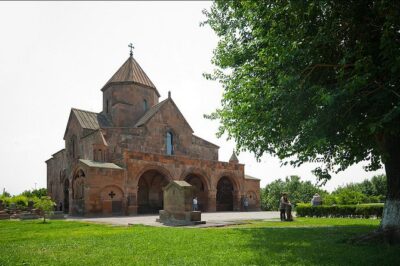
Private 8-9-hour Echmiadzin, Zvartnots, Garni and Geghard trip from Yerevan
Read our review →
Khor Virap, Echmiadzin & Zvartnots UNESCO Small-Group Guided Tour
Read our review →
Garni, Geghard, Echmiadzin and Zvartnots Private Tour
Read our review →
Khor Virap, Echmiadzin Cathedral and Zvartnots Private Tour
Read our review →
Private Tour to Echmiadzin,St.Hripsime & Gayane Churches, Zvartnots Temple
Read our review →Browse the lists this tour appears in