
Reviewed · TOURS
7 Day Tour through Armenia
Armenia packs centuries into seven days. I like the way this tour combines Yerevan’s city sights with far-flung monasteries, mountain roads, and historic towns, and I especially like that admissions are included at most major stops. The main drawback is its packed schedule: Day 6 includes eight separate places, so you should expect a long day with plenty of time in a vehicle.
The tour costs $885.13 per person and includes pickup, mobile ticketing, English-language service, and a maximum group size of 30. I also like that the program works for families, not only serious history fans. The main question is pace. If you prefer lingering over coffee or exploring one site slowly, this trip may feel rushed.
In This Review
- Six details that define this Armenia tour
- Yerevan begins with views, brandy, and city streets
- Etchmiadzin and Zvartnots connect faith with early architecture
- Lake Sevan and Dilijan bring water, woods, and monasteries
- Gyumri reveals a tougher, more artistic side of Armenia
- Garni and Geghard make the classic southern pair
- Ashtarak and Mount Aragats create the busiest day
- Yerevan’s final day looks at film, foundations, and craft
- What the $885.13 price gives you
- Who should book this seven-day route?
- Should you book the Ari Tour Armenia experience?
- FAQ
- How long is the Armenia tour?
- Where is the tour based?
- Is pickup offered?
- What language is the tour offered in?
- What is the maximum group size?
- Are admission tickets included?
Six details that define this Armenia tour
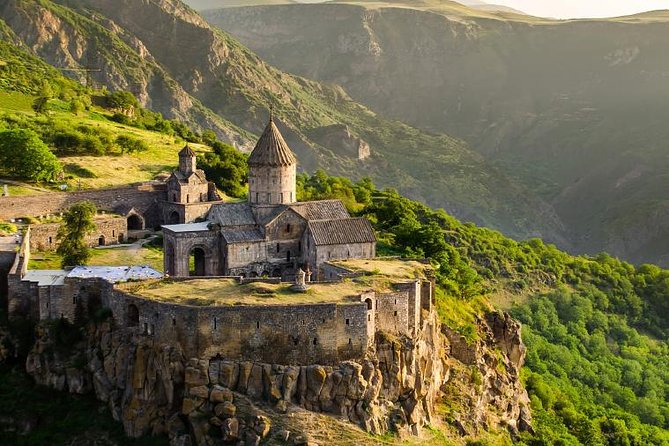
- Seven days from one base: The program is centered in Yerevan, with day trips reaching Lake Sevan, Dilijan, Gyumri, Ashtarak, Garni, and Mount Aragats.
- Ancient buildings at every turn: You visit pagan temples, medieval monasteries, early Armenian churches, a fortress, and museums connected with Armenia’s alphabet and cinema.
- A real mix of city and countryside: Yerevan’s avenues and markets are balanced by lake views, river gorges, mountain villages, and wooded monastery settings.
- Brandy tasting on the first day: The ARARAT Museum adds a local food-and-drink experience rather than making the trip purely about monuments.
- The strongest day is also the busiest: Garni and Geghard make an excellent pair, while Day 6 offers remarkable variety but may test your energy.
- Good support for first-time visitors: Pickup is offered, the tour is in English, and previous feedback gives especially high praise to Ari Tour’s guides, organization, hospitality, and family-friendly approach.
Yerevan begins with views, brandy, and city streets
Your first day stays in Yerevan and gives you a useful introduction to the capital. Begin at the Cascade Complex, a monumental stairway in front of the Opera House. Seven elevators run inside the structure, so you do not need to treat the climb as an athletic challenge. The real prize is the upper view, where Yerevan opens below you.
Allow about an hour here. The Cascade is both a public meeting place and an art-filled urban landmark, but the supplied schedule focuses on the structure and its view rather than a long museum visit. If you want photographs, this is one of the better early stops.
The ARARAT Museum follows with a tasting of Armenian cognacs at different ages. This gives the day a welcome change of pace. You are not simply looking at another church or fortress. You are learning about a product closely tied to Armenia’s modern identity and enjoying a small sensory lesson along the way.
A one-hour tasting is enough for an introduction, though anyone expecting a full food tour should keep expectations modest. The experience is best understood as a focused museum visit with brandy sampling. Drink carefully if you are continuing on foot.
The final stop is Mesrop Mashtots Avenue, where you walk through central Yerevan and look at the city’s architecture. This hour matters because it helps connect the individual sights. You get a sense of how the capital works as a living city, not just as a gateway to old monuments.
The first day is gentle compared with what follows. It is a good arrangement for arriving, getting oriented, and learning a little about Armenian culture before the long road days begin.
A few more Yerevan trips worth weighing up
- The Great Beauty of Armenia: 7-Day Culture and Cuisine Tour
★ 5.0 · 35 reviews - Family package for 7 days
★ 5.0 · 10 reviews - 7 Days Armenia Package with Accommodation, Tours and Transfers
★ 5.0 · 5 reviews
Etchmiadzin and Zvartnots connect faith with early architecture
Day 2 turns to two major religious sites. The Holy Archangels Church is described as the main religious and administrative center of the Armenian Apostolic Church. Its setting is linked with Gregory the Illuminator and the early Christian period, while the nearby Saint Hripsime monastery dates to 618.
The historical details here are important, but the hour-long visit will give you an overview rather than a full study of Armenian church history. Pay attention to the relationship between worship, administration, and national identity. Armenian Christianity is not treated as a side note on this trip. It is one of the main threads holding the week together.
Zvartnots Temple offers a different experience. Construction began in the seventh century under Catholicos Nerses III and continued for about twenty years. The church is connected with Dvin, and both sites are listed as UNESCO World Heritage sites in the supplied description.
Zvartnots is especially useful for seeing how much of Armenia’s architectural story survives in ruins and fragments. You are looking at the remains of a major religious building, not a complete church interior. That means imagination plays a part, and a guide’s explanation can make the site far more meaningful.
The two stops fit well together. One gives you a functioning religious center, while the other shows the remains of an early medieval monument. Both admissions are included, keeping the day simple.
Lake Sevan and Dilijan bring water, woods, and monasteries
Day 3 reaches Lake Sevan, called Armenia’s pearl in the program. The lake is noted for its high altitude and sweet, strikingly blue water. Sevanavank Monastery sits by the lake, giving you an hour to combine a historic site with a broad natural view.
This is a welcome visual break after the stone churches of Day 2. The monastery itself is the focus, but the lake is just as important. Bring a layer of clothing if you are sensitive to cooler high-altitude air, though the tour information does not give a seasonal weather forecast.
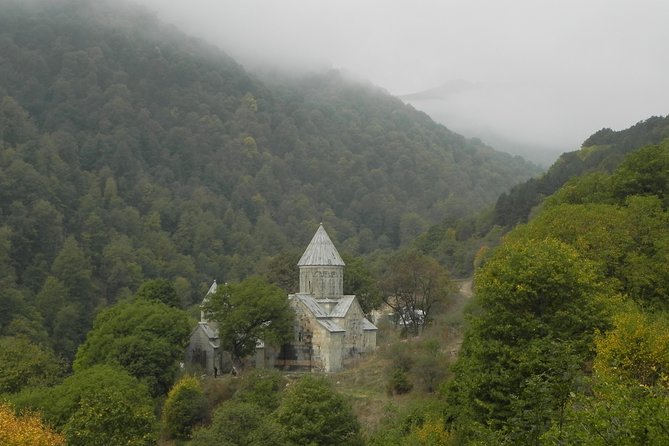
The road then continues toward Dilijan and Haghartsin Monastery. Haghartsin served as a religious and educational center from the 10th through 13th centuries. Its setting among the natural surroundings of Dilijan adds atmosphere that a city church cannot provide.
Goshavank Monastery completes the day. From the 12th to 13th centuries, it became a noted religious and scholarly center under Mkhitar Gosh, an Armenian scholar, legal expert, and scientist. Here the point is not only architecture. It is also the role monasteries played in education, law, writing, and public life.
Three one-hour visits make for a satisfying but active day. You will see less of each site than you would on a specialist archaeology trip, yet the sequence gives you a clear sense of northern Armenia. Sevan brings open views, Haghartsin brings a wooded setting, and Goshavank adds intellectual and religious context.
Gyumri reveals a tougher, more artistic side of Armenia
Day 4 heads to Gyumri, Armenia’s second city and a center of cultural life. Walking through the old streets, you see houses built from colorful stone, with careful architectural details and carved reliefs. Some buildings survived the devastating earthquake of 1988, which gives the old city an added layer of meaning.
This is one of the tour’s more human stops. Instead of viewing Armenia only through royal ruins and monasteries, you see a city shaped by craft, trade, loss, and recovery. The hour-long walk cannot cover all of Gyumri, but it gives you an introduction to the character of its older streets.
Marmashen Monastery sits on the left bank of the Akhurian River. Built between 988 and 1029, its five churches are among the best surviving examples of the Ani school of medieval Armenian architecture. That makes it a particularly useful stop for readers interested in church design.
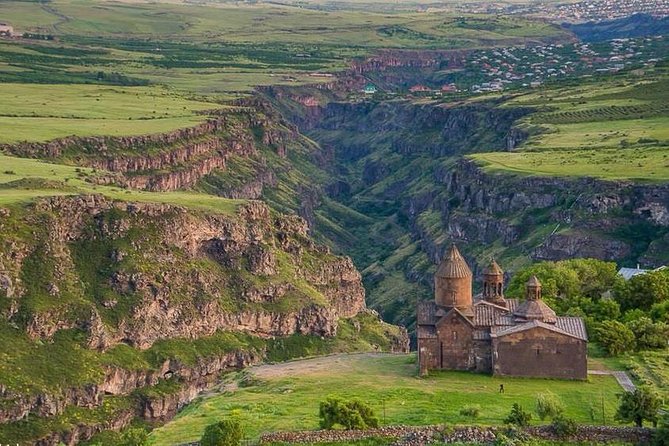
Harichavank Monastery follows on the western slope of Mount Aragats. The complex began in the seventh century, with the main church built in the 13th century. In the 19th century it served as a summer residence for Catholicoses, linking the site to later Armenian religious leadership.
Look for the small chapel built on a section of rock that split from the cliff during an earthquake. It now projects above the canyon, which is an unusual detail and one of the day’s best visual moments.
Day 4 combines urban history with quiet religious sites. The limitation is distance. Three one-hour stops, plus travel between them, make this a full day. Still, the route earns its time because Gyumri and Marmashen offer a side of Armenia that Yerevan and the southern monuments cannot.
A completely different sort of day out of Yerevan:
- Group Tour: Garni, Symphony of Stones, Geghard, Lavash Baking
★ 5.0 · 1,042 reviews - Group Tour: Lake Sevan (Sevanavank), Dilijan (Goshavank, Haghartsin)
★ 5.0 · 1,036 reviews - Group tour: Khor Virap, Noravank, Areni Winery and Cave
★ 5.0 · 651 reviews - Yerevan: Garni, Geghard, Symphony of Stones & Lavash Baking
★ 5.0 · 589 reviews
Garni and Geghard make the classic southern pair
Day 5 is likely the easiest day to recommend. On the way to Garni, you stop at Charents Arch for a view across the Ararat Valley toward Mount Ararat. The view is weather-dependent, but the stop adds a strong sense of place before you reach the temple.
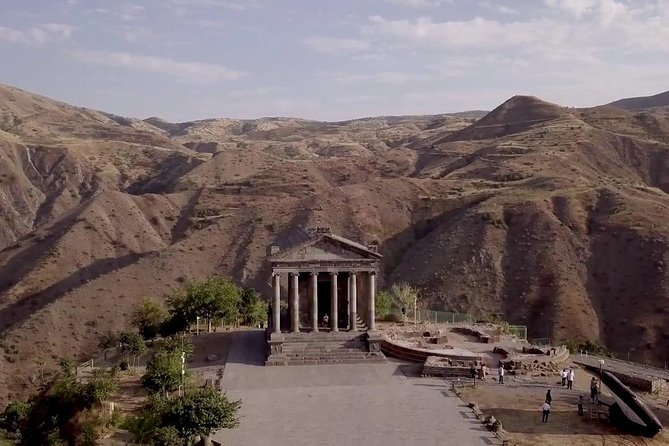
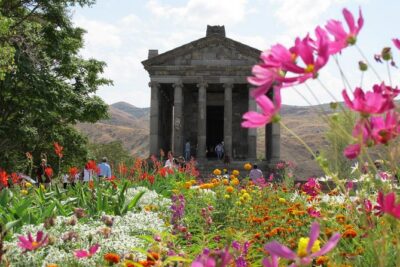
Garni is Armenia’s only surviving pagan temple. It dates to the era of Hellenism and was devoted to Mithra, the pagan sun god. The temple was built by Greek slaves in 76 B.C. and later served as the summer residence of Armenian kings for more than four centuries.
Its columns and classical form make it unlike the medieval churches elsewhere on the route. You can see, in one place, that Armenia’s past was not only Christian. The country’s cultural story also includes pagan beliefs, Hellenistic influence, royal power, and later religious change.
The one-hour visit is enough to take in the temple and its setting, but you may wish you had extra time if you enjoy photography or ancient architecture. The schedule is designed for breadth, not a slow archaeological examination.
Geghard Monastery provides a dramatic contrast. The complex includes churches and chambers cut into solid rock, with buildings dating mainly from the 10th to 13th centuries. The main church was built in 1215, while the Avazan Church, from 1283, is carved directly into the rock.
The name Geghard means lance in Armenian and refers to the biblical spear once kept at the monastery before being moved to the museum at Echmiadzin Cathedral. Caves, medieval dwellings, and hundreds of khachkars, or cross-stones, surround the complex.
Geghard is the kind of place where the physical setting and the spiritual story work together. You can expect uneven stone surfaces and a church interior that feels very different from Garni’s open classical form. Allow the full hour, and listen closely to the explanation of the rock-cut chambers.
Ashtarak and Mount Aragats create the busiest day
Day 6 is the tour’s most ambitious section. It begins around Ashtarak with a chain of small churches and local landmarks. Tsiranavor Church means apricot-colored church and dates to the fifth century. It is partly ruined and sits at the edge of a gorge.
Karmravor Church means red-colored church and dates to the seventh century. Spitakavor Church of Ashtarak means white-colored church and dates to the 13th century. It too is partly ruined and located beside a gorge.
These three stops are valuable because they let you compare Armenian church forms across several centuries. They are not grand complexes on the scale of Geghard, so the appeal is in their age, setting, and changing stonework.
The 1664 Ashtarak Bridge crosses the Kasagh River with three arches of unequal size. The area below and around it is used for picnics, adding a simple local touch to an otherwise monument-heavy day.
Saint Gevorg Church houses remains associated with Saint George, known as the Slayer of Dragons. Inside are religious frescoes painted in the 17th century. The interior art gives you something different from the bare stone and carved exteriors seen at several other stops.
Saghmosavank Monastery is a 13th-century Armenian Apostolic church. Its name relates to spiritual songs sung by Armenian clergy, and its good acoustics are part of the appeal. If the church is quiet, listen for how sound behaves inside the space.
At Oshakan, Saint Mesrop Mashtots Cathedral marks the burial place of Mesrop Mashtots, creator of the Armenian alphabet. This is one of the most culturally important stops of the week. The alphabet is central to Armenian identity, literature, and religious tradition, so this visit gives meaning to the written language you see throughout the country.
Amberd Fortress closes the day at 2,300 meters above sea level on the slopes of Mount Aragats. The 10th-century fortress sits where the Arkashen and Amberd rivers meet and served as a refuge for Armenian kings during war.
The sequence is impressive, but eight stops in one day is a lot. You should book this tour expecting short visits and a long day on the road. The reward is range: small churches, a bridge, a monastery, a cathedral, and a mountain fortress all appear in one sweep.
Yerevan’s final day looks at film, foundations, and craft
The last day returns to the capital. The Parajanov Museum honors the Armenian filmmaker Sergei Parajanov through assemblages, collages, drawings, dolls, and film sketches. His work is described as highly imaginative, so this museum offers a more personal and artistic experience than the archaeological sites.
The Erebuni Museum presents the story of Yerevan’s foundation. It sits at the foot of Arin Berd hill, above which the Urartian fortress of Erebouni was built. This stop helps place the capital in a much older setting than its modern streets suggest.
Vernissage Market ends the week with handmade work sold by local people in an open-air setting. It is the best place on this route to browse for a small craft rather than another photograph of a monastery. Prices, selection, and payment details are not provided, so treat it as a browsing stop rather than planning a specific purchase.
What the $885.13 price gives you
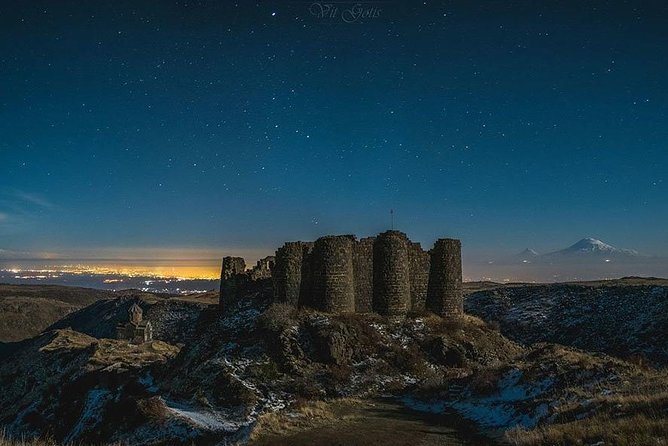
At $885.13 per person, this is not a cheap city sightseeing package. It is a seven-day program covering a large share of Armenia, with admission included at the paid stops, pickup offered, English service, and a group limit of 30.
The value depends on how much planning you want removed from your hands. You are paying for a ready-made route through places that would take careful research and several separate day trips to arrange. The schedule also links sites that make sense together, such as Garni and Geghard, or Haghartsin and Goshavank.
The price is easier to justify if you want Armenia’s major religious and historical sights in one organized week. It is less attractive if you plan to rent a car, travel slowly, or spend most of your time in Yerevan.
Feedback about Ari Tour is strongest on organization, helpful guides, and hospitality. The experience also appears to work well for families, with children described as staying interested despite the amount of history. Positive comments also point to Armenian food, safety, and the feeling of being welcomed.
The five available ratings average five stars, but that is a small sample. I would treat it as encouraging evidence, not a guarantee that every day will run at your preferred pace.
Who should book this seven-day route?
I would recommend it to a first-time visitor who wants a broad introduction without arranging transport and admissions independently. It suits people who enjoy ancient churches, cultural museums, mountain scenery, and a steady stream of historic places.
Families may find the variety helpful. A brandy museum, market, fortress, lake, film museum, and city walks break up the church visits. The program also has enough visual variety to keep younger visitors involved, though Day 6 may be tiring.
I would hesitate to recommend it to anyone who needs a slow pace, long meal breaks, or substantial free time. The one-hour format is consistent, and the final two days are especially full. You should also be comfortable with repeated road travel and changing scenery.
Pickup is offered, mobile tickets are available, and the tour is conducted in English. Most people can participate, and the maximum group size is 30, so you should not expect a private, custom-paced journey.
Should you book the Ari Tour Armenia experience?
Book it if you want a strong first look at Armenia and value efficient organization over a relaxed schedule. The route covers Yerevan, Lake Sevan, Gyumri, Ashtarak, Garni, Geghard, and Amberd, while also adding museums, markets, and a brandy tasting.
Skip it if your ideal holiday means choosing one monastery each day and lingering until sunset. For everyone else, this is a well-rounded introduction with excellent variety, practical support, and a clear focus on Armenia’s religious, artistic, and national story.
If you book, keep Day 6 free of other plans, wear comfortable footwear, and save some energy for the high-altitude fortress and the many church visits. Cancellation is free up to 24 hours before the start time. After that, the payment is not refunded, and late changes are not accepted.
FAQ
How long is the Armenia tour?
The experience lasts approximately seven days.
Where is the tour based?
The tour is based in Yerevan, Armenia, with excursions to locations around the country.
Is pickup offered?
Yes, pickup is offered.
What language is the tour offered in?
The tour is offered in English.
What is the maximum group size?
The tour can have a maximum of 30 participants.
Are admission tickets included?
Admission is included at the listed paid attractions. Some stops, including the Cascade Complex, Mesrop Mashtots Avenue, and Vernissage Market, are listed as free.
Just added around Yerevan
- Photography tour in Yerevan (Yerevan city tour)★ 4.5 · 3 reviews
- Private Tour: Lake Sevan, Sevanavank★ 4.5 · 3 reviews
- Mount Aragats, Amberd Fortress, Saghmosavank Monastery, Alphabet – private tour★ 4.0 · 3 reviews
- Tsitsernakaber-Hripsime-Echmiatsin-Noy brandy factory★ 4.5 · 3 reviews
- Secret Spots Of Armenia Day Private Tour★ 5.0 · 3 reviews
- Day Trip to Tatev Monastery★ 4.5 · 3 reviews
- Wine Trip in Yerevan★ 5.0 · 3 reviews
- Private Tour: Garni-Geghard-Tsaghkadzor-Sevan★ 5.0 · 3 reviews
Tours, compared.
Garni, Symphony of Stones, Geghard, Lavash Baking
Read our review →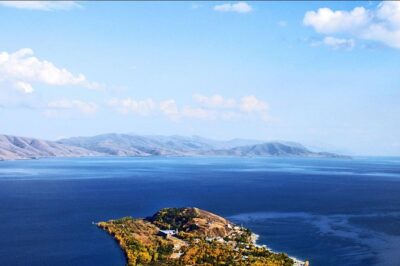
Lake Sevan (Sevanavank), Dilijan (Goshavank, Haghartsin)
Read our review →
Tsaghkadzor (Kecharis, Ropeway), Lake Sevan, Trout barbecue treat
Read our review →
Khor Virap, Noravank, Tatev monasteries (wayback on Ropeway)
Read our review →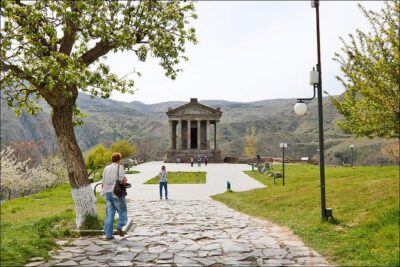
Garni pagan temple, Geghard monastery, Lake Sevan, Sevanavank
Read our review →
Amberd, Aragats, Lake Kari, Saghmosavank, Alphabet
Read our review →
Echmiadzin Cathedral & churches, Zvartnots Temple
Read our review →Browse the lists this tour appears in